Welcome

Passionately curious about Data, Databases and Systems Complexity. Data is ubiquitous, the database universe is dichotomous (structured and unstructured), expanding and complex. Find my Database Research at SQLToolkit.co.uk . Microsoft Data Platform MVP

"The important thing is not to stop questioning. Curiosity has its own reason for existing" Einstein


Showing posts with label Data Analytics. Show all posts

Sunday, 4 July 2021

Operational Intelligence

The answers lies in insights from data analytics whether diagnostic , predictive or  prescriptive analytics. 

The Gartner model looks at 4 areas to gain competitive advantage.


I Watching a presentation at Microsoft Build this slide was shared adding an additional dimension of cognitive analytics. Interesting to see the deeper insight showed in a diagram as AI as the driving force through the advanced analytics areas.


Thursday, 24 January 2019

SQLBits 2019 is fast approaching

SQLBits 2019 is fast approaching. This year it is in Manchester 27 Feb - 2 March 2019. There is an informative article about The Great Data Heist. My insights on what to expect of the conference are here

There are some interesting training sessions on the Wednesday and Thursday to attend. These are

Wednesday 27 February 2019
with Alexander Klein and Gabi Münster
with Itzik Ben-Gan
with Kalen Delaney
with Jason Horner
with Alberto Ferrari
with Mark Whitehorn and Kate Kilgour
with Kevin Kline, Richard Douglas, Andy Yun and Andy Mallon
Thursday 28 February 2019
with David Klee and Bob Pusateri
with Erik Darling
with Marco Russo
with Terry McCann and Simon Whiteley
with Theo van Kraay

I hope to see you there.

Wednesday, 7 November 2018

PASS Summit 2018 Keynote Day 1


The first keynote of PASS summit was delivered by Rohan Kumar entitled SQL Server and Azure Data Services: Harness the ultimate hybrid platform for data and AI


Customer priorities for a modernized data estate are: modernizing on-premises, modernizing to cloud, build cloud native apps and unlocking insights.


The announcements follow:

SQL Server 2019
SQL Server 2019 Public Preview  is a great way to celebrate the 25th anniversary of SQL Server

There is the introduction of big data clusters which combines Apache Spark and Hadoop into a single data platform called SQL Server. This combines the power of Spark with SQL Server over the relational and non-relation data sitting in SQL Server, HDFS and other systems like Oracle, Teradata, CosmosDB.

There are new capabilities around performance, availability and security for mission critical environments along with capability to leverage hardware innovations like persistent memory and enclaves.

Hadoop, ApacheSpark, Kubernetes and Java are native capabilities in the database engine.

Accelerated data recovery (ADR) was demonstrated and is incredible. It is at public preview.  The benefits of ADR are
  • Fast and consistent Database Recovery
  • Instantaneous Transaction rollback
  • Aggressive Log Truncation

Azure HDInsight 4.0

HDInsight 4.0 is now available in public preview.

There are several Apache Hadoop 3.0 innovations. Hive LLAP (Low Latency Analytical Processing known as Interactive Query in HDInsight) delivers ultra-fast SQL queries. The Performance metrics provide useful insight.

Integration with Power BI direct Query, Apache Zeppelin, and other tools. To learn more HDInsight Interactive Query with Power BI.

Data quality and GDPR compliance enabled by Apache Hive transactions
Improved ACID capabilities handle data quality (update/delete) issues at row level. This means that GDPR compliance requirements can now be meet with the ability to erase the data at row level. Spark can read and write to Hive ACID tables via Hive Warehouse Connector.

Apache Hive LLAP + Druid = single tool for multiple SQL use cases

Druid is a high-performance, column-oriented, distributed data store, which is well suited for user-facing analytic applications and real-time architectures. Druid is optimized for sub-second queries to slice-and-dice, drill down, search, filter, and aggregate event streams. Druid is commonly used to power interactive applications where sub-second performance with thousands of concurrent users are expected.

Hive Spark Integration
Apache Spark gets updatable tables and ACID transactions with Hive Warehouse Connector

There are several Apache Hadoop 3.0 innovations. Hive LLAP (Low Latency Analytical Processing called Interactive Query in HDInsight) for ultra-fast SQL queries. The Performance metrics provide useful insight.

Integration with Power BI Direct Query, Apache Zeppelin, and other tools. To learn more watch HDInsight Interactive Query with Power BI.

Better data quality and GDPR compliance enabled by Apache Hive transactions
Improved ACID capabilities handle data quality (update/delete) issues at row level. GDPR compliance requirements can now be meet with the ability to erase the data at row level. Spark can read and write to Hive ACID tables via Hive Warehouse Connector

Apache Hive LLAP + Druid = single tool for multiple SQL use cases

Druid is a high-performance, column-oriented, distributed data store, which is suited for user-facing analytic applications and real-time architectures. Druid is optimized for sub-second queries to slice-and-dice, drill down, search, filter, and aggregate event streams. Druid is commonly used to power interactive applications where sub-second performance with thousands of concurrent users are expected.

Hive Spark Integration
Apache Spark gets updatable tables and ACID transactions with Hive Warehouse Connector.


Apache HBase and Apache Phoenix
Apache HBase 2.0 and Apache Phoenix 5.0 get new performance and stability features and all of the above have enterprise grade security.

Azure
Azure event hubs for Kafka is generally available
Azure Data Explorer is in public preview.

Azure Databricks Delta is in public preview
  • Connect data scientist and engineers
  • Prepare and clean data at massive scales
  • Build/train models with pre-configured ML

Azure Cosmos DB multi master replication was demoed with a drawing app, Azure Cosmos DB PxDraw
Azure SQL DB Managed Instances will be at General Availability (GA) on Dec 1st. This provides Availability Groups managed by Microsoft.

Power BI


The new Dataflows is an enabler for self-service data prep in Power BI

Power BI Desktop November Update
  • Follow-up questions for Q&A explorerIt is possible to ask follow-up questions inside the Q&A explorer pop-up, which take into account the previous questions you asked.
  • Copy and paste between PBIX files
  • New modelling view makes it easier to work with large models.
  • Expand and collapse matrix row headers


Monday, 24 September 2018

SQL Server 2019, Big Data and AI


At Microsoft Ignite SQL Server 2019 was launched. An amazing product for the future combining SQL Server 2019 with big data and analytics. It is great to see the combining of multiple tools in once place, a one stop shop for large and small data, structured and unstructured and from multiple sources.

There are 3 major components to SQL Server 2019.


The creation of a data virtualization layer that handles complexity of all data sources and format.  Enabling the integration of structured and unstructured data without moving the data.

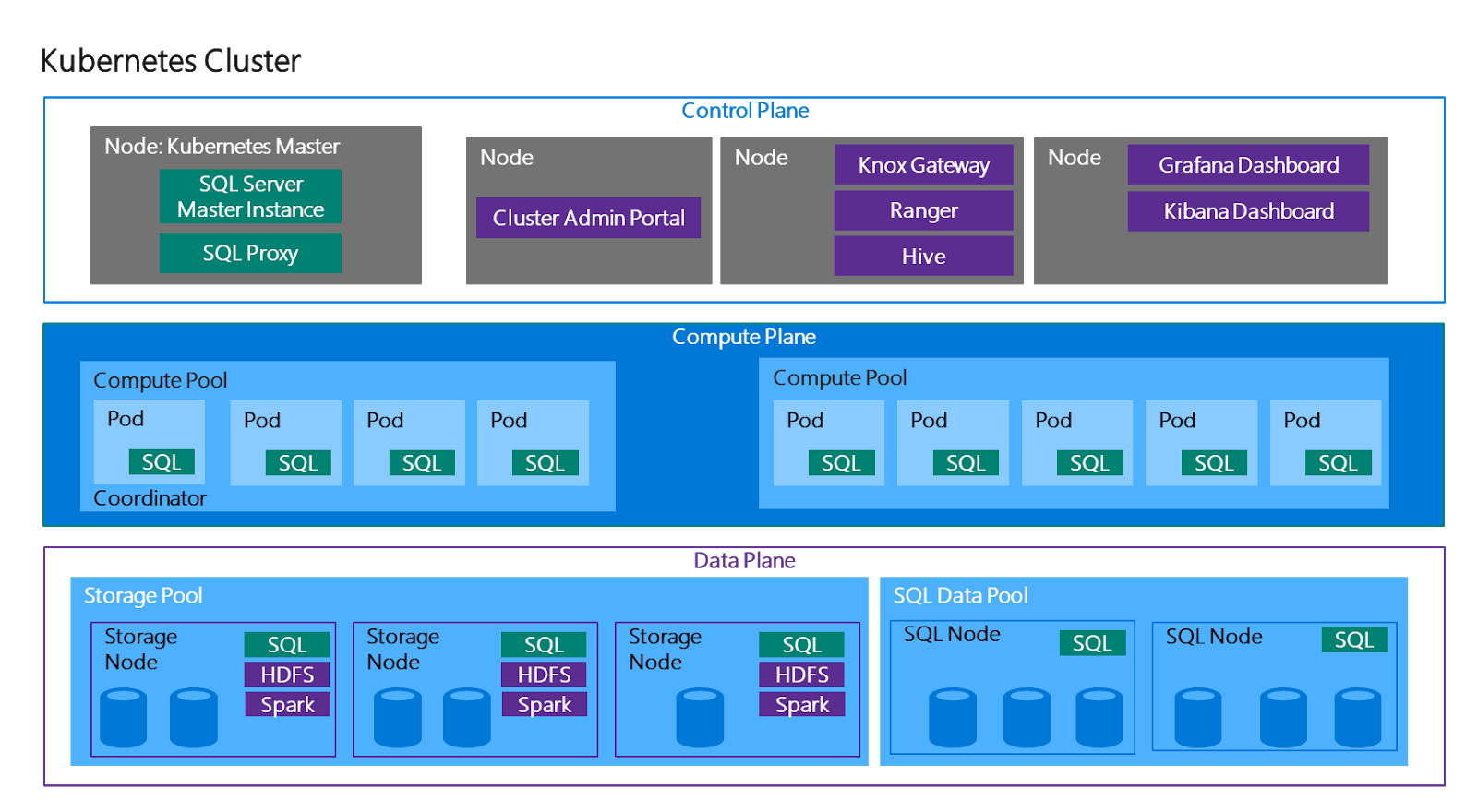
The streamlining of data management with SQL Server 2019 big data clusters deployed in Kubernetes integrating HDFS and Spark. The architecture is explained in more depth here and looks like


The creation of a complete AI platform that can use Spark to analyse both structured and unstructured data anywhere, use SQL Server machine learning services and SparkML.


In summary SQL Server big data clusters allow you to deploy scalable clusters of SQL Server, Spark, and HDFS Docker containers running on Kubernetes.

Read More


Monday, 28 May 2018

CODEX: The Control of Data EXpediently


Complexity exists in database systems whether managing data or databases. The ability to understand this complexity and use this understanding to improve and innovate in the management of these database systems is an important step.  My PhD research investigations centred around understanding best practices and the complexity that exists around management of database systems. 

I used the analogy of a CODEX. The CODEX is a blueprint for database systems management. The acronym CODEX was selected by analogy with the revolutionary introduction of the Codex (Netz & Noel 2007, pp.69–85) in the first century AD which changed the storage medium from a roll to a Codex (book format). This brought challenges migrating the data, but significant benefits of increased speed of data access, reference and durability (of the parchment). Not all texts were migrated from rolls to Codex and those that were not migrated became defunct. Text case was changed from capitals to lowercase and minuscule copies made, resulting in further change; original majuscule manuscripts have not survived. This scholarly activity led to a revival in reading classic documents and a development of a centre of culture.

The CODEX is one of the outputs from the research, based on interpretation of the data. The components stated in the CODEX, are the most prevalent components that are connected when managing database systems.


The CODEX (Control of Data EXpediently) blueprint acronym is constructed as: C for control; O for control of Operations; D for data; E for expediently; and X for unpredictable events. It is an acronym for a system or way of controlling operations and data in a rapid, efficient and accurate manner.

The five inputs into the CODEX are required for every piece of data or database management work. These five inputs are described in the paragraphs below.

C. An important step in any database system is the control system: defining the business needs, budget, controlling the people and time factors. People are important in the management of the database system. It involves the stakeholders and the teams working together to achieve a single goal. The culture driving this collaborative venture forward will undoubtedly raise conflict, but this should be integrated with a high level of communication with all levels in management, the stakeholders, the teams and data and database staff. Also, the governance related to data and data quality should be controlled.

O. Control of operations of the database system is the core day to day running of management tasks, the processes and the performance of the system, orchestrating management through automated and self-managing systems where possible. Technical management needs to understand how internal and external technologies integrate. This is vital when using cloud technologies because internal managers have no control of the details. All of these operations require security to be considered to protect the data.

D. The increasing volume of data acquired today requires storage in various forms. Thus, databases or big data solutions have developed to satisfy the current demand not only for storage but also to provide information quickly and accurately. The variety of data, big or small, requires governance and has a purpose. The reporting and visualization of data is key to enhance business ability to grow, adapt and understand the complexity. Data is continually changing and more of it needs to be stored to meet the demands of society. Being able to understand the data for it to be available and useful, is a core requirement to improve and innovate.

E. Expediency is driven from the need to have efficient control over costs, speed of delivery and change. Designing database systems that are easy to manage, simple and agile utilising reference architectures and blueprints is key to performing expediently. To be able to proceed the critical factors are knowledge, skills, learning, leading to understanding and allowing planning to unfold unhindered. Development can lead to fast performing applications and efficient management through automation.

X. With any system and particularly in a diverse and ubiquitous database system, systems change is always happening, be it with the number and type of database platforms, the new technologies, global business or environment change. Change is rapid and diverse. Using patterns and always establishing best practice will help in the management of database systems. These best practices need to be able to rapidly change as requirements change or are not known at the outset. Producing documentation that can be automatically created is key for accuracy and ensuring documentation is available. Also, unpredictable events can occur and any changes to the components must be documented and changes to all respective components made. There is continuous feedback over time. 

I will discuss in another blog post, how the suggested pattern, CODEX (Control of Data EXpediently), can help improvement in managing database systems. Using AI to improve management, incorporating telemetry, and systems diagramming will aid with the change to come.

Holt, Victoria (2017). A Study into Best Practices and Procedures used in the Management of Database Systems. PhD thesis The Open University

Friday, 2 March 2018

Databricks in Azure

Databricks is a big data unified analytics platform that harness the power of AI. It is built on top of Spark, serverless and is highly elastic cloud based. Azure Databricks is in preview currently. This new Azure service aims to accelerate innovation by enabling data science with a high-performance analytics platform that’s optimized for Azure. It has native integration with other Azure services such as Power BI, SQL Data Warehouse, Cosmos DB as well as from enterprise-grade Azure security, including Active Directory integration, compliance, and enterprise-grade SLAs. More information can be found in these two links

A technical overview of Azure Databricks
https://azure.microsoft.com/en-gb/blog/a-technical-overview-of-azure-databricks/

Introduction to Azure Databricks
https://channel9.msdn.com/Events/Connect/2017/T257

Databricks is a collaborative workspace.


Databricks have an ebook Simplifying Data Engineering to Accelerate Innovation which covers

  • The three primary keys to better data engineering
  • How to build and run faster and more reliable data pipelines
  • How to reduce operational complexity and total cost of infrastructure ownership
  • 5 examples of enterprises building reliable and highly performant data pipelines

Tuesday, 13 February 2018

Introduction to Splunk for operational intelligence


Machine data is everywhere. Machine data is digital information created by computers, mobile phones, embedded systems, sensors and other networked devices. The data types:


Machine data can intersect with and improve human lives. A summary is in this video


Splunk, a software platform, has the capability to leverage machine data for data management and analytics.  It can be used for

  • Data driven decision making
  • Alerts for network security threats
  • Report on system failures
  • Analyse and improve functionality

It enables performance analysis, dashboard creation, monitoring, troubleshooting and investigation of the real-time data collected. A Edureka learning video showed the Splunk components.  


and an overview of Splunk.


The very useful Splunk free fundamentals 1 course is a self paced learning course covering search, navigation, use of fields, statistics, reports, dashboards and alerts.

Friday, 17 November 2017

Big Data LDN 2017


I attended Big Data London 15-16 Nov 2017 with leading data & analytics experts showcasing their tools to help with delivering data-driven strategy. The conference showcased the fourth industrial revolution report which explains what the UK’s data leaders think about the state of the UK data economy.

A summary of things I found interesting during the two day event are summarized here.

Machine Learning is such a topical discussion point, but it is not that difficult to get started. An area to initially look at is co-occurrence and recommendation.  Co-occurrence helps you find behaviours and you can use that to find recommendations in areas such as textual analysis and intrusion detection.


Machine learning was described as the integration between analytics and operations. The three questions to ask were: what algorithm, what tools and what process. 90% of machine learning success is in data logistics (being able to handle lots of data types), not learning.

The CDO’s playbook was launched. The Chief Data Officer is a rapidly expanding role and this book offers practical advice on what this role is, how it fits into to other c-suite roles and provides actionable tips.

There are many challenges when dealing with citizen data. At the heart of audiences is

- single view of the customer
- deeper engagement
- supported intelligence
- relationship management

The main challenge is data quality and having a high enough quality of data to provide insight.

Citizens want to be data scientists and be able to dive into the data with ease. This self-service model can have challenges. Better governance, data management and operational efficiency are required together with the rise of managed service to remove the complexities of running these services.

The keynote on day 2, machine learning, AI and the future of big data analytics by Dr Amr 
Awadallah, Co-founder of Cloudera, talked about a history of waves.

- wave 1 automation of knowledge transfer
- wave 2 automation of food
- wave 3 automation of discovery
- wave 4 making and moving stuff (Industrial revolution)
- wave 5 automation of processes (IT revolution)
- wave 6 automation of decisions.

We are in wave 6 which is about collecting data and leveraging data to make decisions. It is different from the BI wave where humans made decisions. The new wave is learning how decisions are made and automating them. Things to consider for success are

- build a data driven culture
- develop the right team and skills
- be agile/lean in development
- leverage DevOps for production
- right size data governance 

There were discussions about data narrative and telling a story to the audience. The five steps learnt for better storytelling

- identify the right data
- choose the right visualizations
- calibrate visuals to your message
- remove unnecessary noise
- focus attention on what’s important

Matt Aslett talked on pervasive intelligence: the future of big data, machine learning and IoT, the details of which have been published in a report. He discussed trends and implications of the AI automation spectrum. It will bring about fundamental and wide ranging positive societal implication that will change the way we live, work, play, transact and travel. He mentioned a risk of having a small number of platform oriented companies that control the forces of production for generating value from data. The 4sight report on the future of IT is coming soon and sounds an interesting read.

Deep learning demystified explained why neural networks, that are not new, have only just come to the fore. It was because they were originally thought of as part of a failed experiment. In fact, it was that they did not use enough data. For supervised learning it works well with very large data sets. The key things to think of when considering deep learning are that it
- must have large data, a minimum of 10 million labels of data
- what level of accuracy do you need?
- can something simple work? – start with classical models such as linear models

There is a deep learning institute to learn more. 

The conference was useful and provided a wide range of discussions on high level data topics.